





Student organizations, debate clubs, and youth leadership forums are beginning to use the civic practice strategy games offer.
Educators and policy mentors are observing that the card battle game tips are aiding in the development of analysis, patience, and the ability to make and execute structured decisions among young people aspiring to hold legislative positions.
Recreational competition offers hands-on experiences in negotiation, risk management, and planning, which are fundamental to the political arena.
Beyond the Table
Card games are competitive, requiring players to assess and allocate their resources optimally, predict and counter the next moves of their opponents, and strategize under changing circumstances.
These are skills that policymakers use to draft legislation, allocate and reallocate resources in the public purse, and manage state crises stemming from the reallocation of resources.
The art of withholding a powerful move until after the right moment is similar to the political practice of timing the introduction of a bill or lobbying for support before a pivotal vote.
Youth civic programs report that students participating in structured gameplay demonstrate enhanced forecasting abilities.
They become adept at recognizing and analyzing patterns and at understanding and accepting that every outcome has an associated opportunity cost.
In governance, the same outcome determines whether a policy initiative moves forward or stagnates in committee.
Negotiation and Coalition Building
The multiplayer scenarios facilitate the formation of temporary alliances and the divvying up of trust. They quickly realize that they cannot achieve success alone.
This is similar to how parliamentary systems work, as the formation of coalitions is necessary to approve laws.
These environments allow young players to understand how the style of communication, trustworthiness, and shared objectives affect the ability to come to agreement. These are the building blocks of negotiation, whether diplomatic or legislative, of the future.
There is also an aspect of negotiation that is ethical in nature. Fairness issues, rule interpretation, and the sport itself confront players. These lessons, when applied to public life, may help to create leaders that appreciate and work with the ethics of transparency.
ALSO READ: The Power of TikTok: Strategies for Boosting Likes on Political Content
Emotional Regulation and Public Leadership
Effective leaders are able to manage their emotions and remain steadfast in the emotionally charged political arena. Competitive environments train participants to manage their emotions and, after an initial setback, to pivot their strategy.
The ability to constructively continue to engage is critical. Losing a game becomes feedback and not a failure. This ability is critical in public office and the ability to engage in constructive dialogue when faced with negative comments on proposals.
Youth guides also observe an improvement in listening skills. The ability to sense the actions of opponents and teammates, an ability that later facilitates stakeholder management, public engagement, and cross-the-aisle negotiations.
Civic Curiosity Through Play
The most significant and positive outcome of interest in strategy gaming is how it stimulates interest in the wider field of civic gaming.
People start to notice and understand the correlations between the game and civic structures, such as in the game the systems of taxes, defense, and regulation on trading (and in the real world the same systems).
This kind of engagement could encourage interest in the field of civic education, participating in voting, and civic policymaking.
A mix of competition and thought in an activity allows the creation of an analytical citizen. An analytical citizen is someone who, when it comes to politics, lacks a distant or unrealistic viewpoint and is prepared to enter the legislature from the ground up.
It may seem strange to land in the legislature from the game table, but the journey is a mix of social and cognitive skills, and those who have these skills are ready to lead the public in a way that is closely aligned with the values of contemporary public leadership.
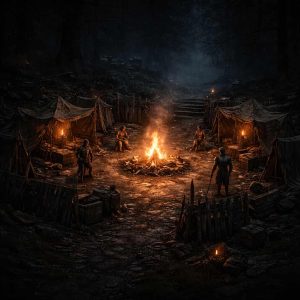 Diablo II does not look like a game about governance. It has demons, loot, and endless violence. Yet beneath the clicking and chaos sits a clear political vision. Sanctuary is a world where institutions have failed, authority is suspect, and survival depends on local trust rather than grand systems, which is partly why buying D2r items can feel like relying on community trade networks instead of any official system. In that sense, Diablo II feels uncomfortably close to our own moment.
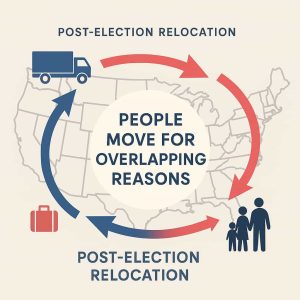 Every election cycle sparks debate, but the aftermath brings something quieter and personal: people reconsidering where they want to live. Some don’t just switch channels or opinions, they rent a truck and move. The “blue state to red state” or “red state to blue state” labels make it sound like a tidy storyline, but real motives overlap: jobs, costs, family, and yes, political climate. Even long distance movers NYC play a role here, helping families leave a dense urban center not because of one single cause, but because multiple push factors stack the same way moving boxes do: imperfectly, personally, and all at once.
 Journalists often obtain and distribute official comments, news releases, and leaked material.
 Direct Effects on the Economy
 EU foreign policy minister Josep Borrell announced last Monday that sanctions will be imposed on unnamed 30 people and organisations deemed responsible for Navalny’s death. The announcement was made after Vladimir Putin proclaimed himself as the reelected president of Russia based on the result of a recently held election.
 Yet other Russian opposition leaders and critics of Putin believed that authorities intentionally delayed the release of Navalny’s body, as a way to suppress the potential outpouring of sympathy for Navalny prior to the forthcoming sham election. Navalny’s remains were released to his mother two weeks later after investigators supposedly performed a chemical analysis.
 Brazil, Russia, India and China had informally banded together in 2009, to challenge the world domination of the U.S. and its Western allies, calling their alliance BRIC. Currently, the bloc is holding its 15th annual summit (August 22-24, 2023) in Johannesburg, South Africa as the country became the 5th member in 2010; and its addition has modified the acronym to BRICS.
 Actually, the acronym BRIC came up in 2001 after a Goldman Sachs research identified the founding four countries as the emerging economies at that time, because of their growth potential. The creation of the BRIC coalition back then was actually initiated by Russia.


 When a space needs to be restored to its original state, reinstatement contractors step in to make it happen. Whether it’s a commercial office, a residential property, or a retail space, these professionals ensure that buildings meet legal and landlord requirements before handing them back, office reinstatement Singapore combines attention to detail, technical expertise, and a clear understanding of the project’s scope.



 Business outsourcing has had a major impact on politics and international relations. It has allowed businesses to access resources from around the world, while also creating new opportunities for collaboration between countries. This has led to increased competition and cooperation between countries, as well as changes in the way governments interact with each other. Additionally, business outsourcing has created new challenges for governments, such as the need to manage trade agreements and protect intellectual property rights.
 Bankruptcy is a major concern today, affecting individuals, businesses, and even entire nations. Despite its widespread impact, political causes often contribute to bankruptcy. This article will explore some of these causes and the devastating effects they can have.
 Mathematics has had a long-standing relationship with

 Expertise and Experience
